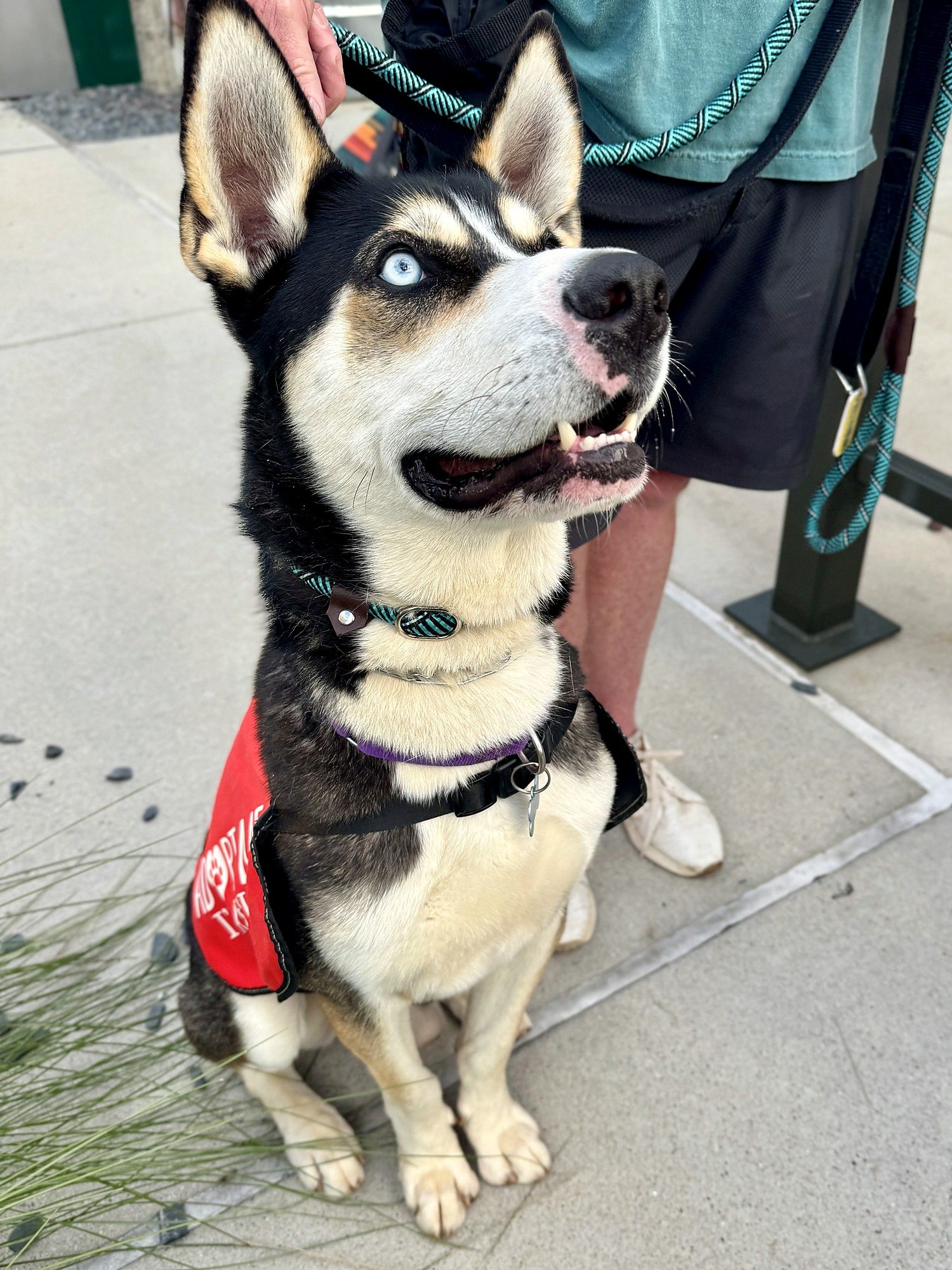
Puppies and new dogs
Start right, and you won't need most of the rest of this website.
A new puppy, or a new adult dog from a shelter or rescue. The first few months decide a lot. One or two visits early is the cheapest training you'll ever buy.
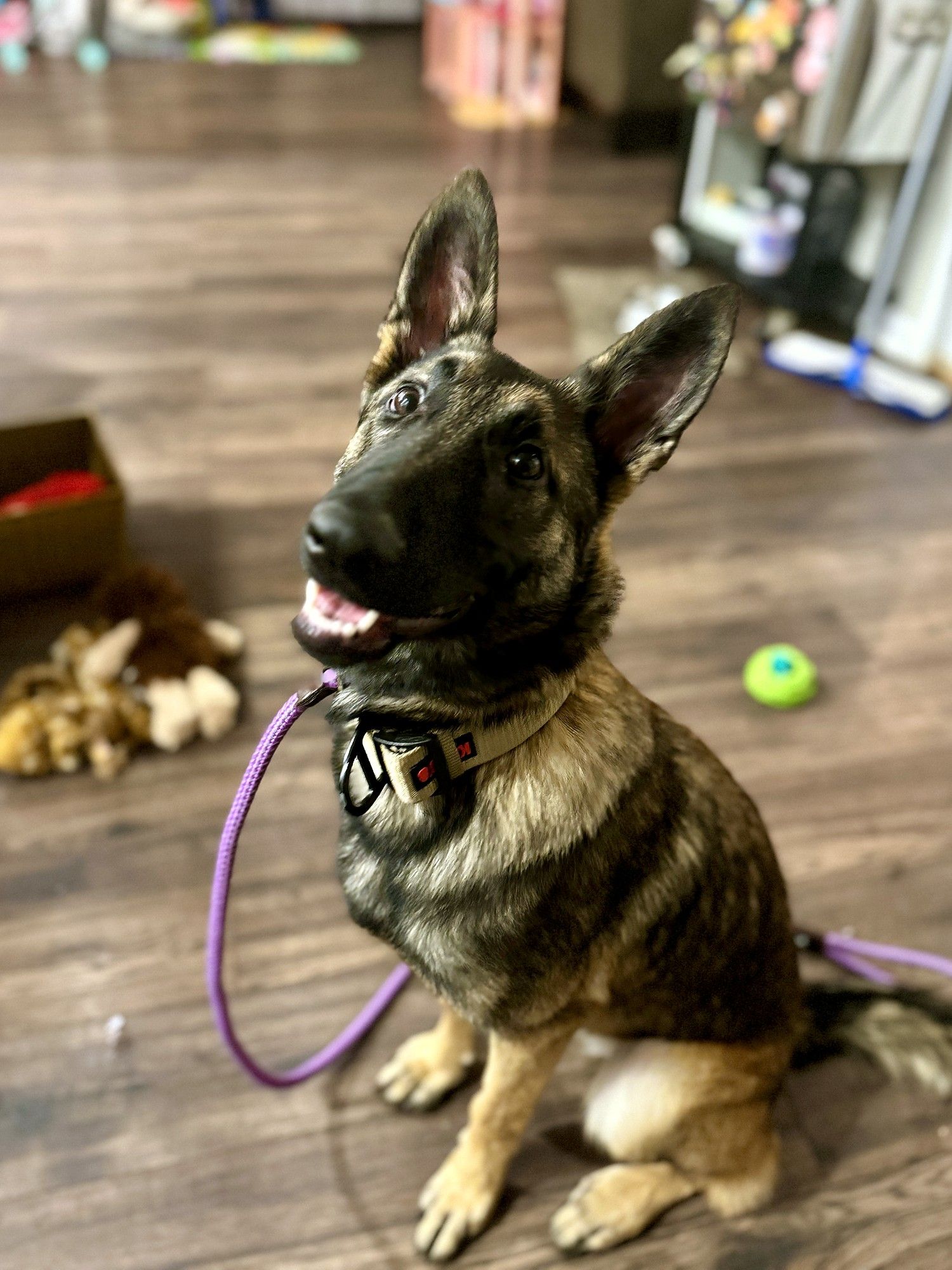
Adopted in the last six months?
The Initial Assessment Visit is free.
Upload the adoption paperwork with the intake form. Phillip comes out for 45 minutes and you pay nothing. It's the single most useful thing you can do in a rescue dog's first month.
Puppy and new-dog plan
The first months, in order.
Most of what goes wrong with young dogs is not a training failure. It's too much, too soon.
- 1
Week one: less than you think.
A new dog, puppy or adult, needs a quiet routine, a place to sleep, predictable meals and short calm walks. Not the dog park. Not the brewery. Not every friend you have. Phillip's first visit is mostly about taking things off your list.
- 2
The boring foundations.
Crate as a good place, not a punishment. House training on a schedule, not a hope. Name, recall to a cue, hand-feeding for focus, gentle handling of paws, ears and mouth so the vet visit later isn't a fight.
- 3
Socialization that means something.
Socialization isn't meeting a hundred dogs. It's the puppy learning that new things are safe at a distance it can handle: traffic, a skateboard, a person in a hat, a calm adult dog. Big-breed puppies in particular need this done carefully, because a fearful 90-pound adult is a much bigger problem than a fearful 15-pound puppy.
- 4
Adolescence, with a plan.
Somewhere between six and eighteen months your sweet puppy will forget everything and test you. That's normal. The families who booked a session before that phase get through it faster. The ones who didn't call us then, which is fine too.
One visit or a few
Most puppy families book one assessment and a check-in.
The assessment sets up the house, the crate, the schedule and the handling. A private lesson a month or two later catches the things that have started to slide and sets you up for adolescence. That's it for a lot of dogs. If your puppy is fearful, or a working breed, or you've never had a dog before, you might want a couple more. Phillip will say which.
Prices are the same as everything else: $125 for the assessment, $175 for a lesson, no packages. See pricing.
Straight answers
Puppy and new-dog questions
How old should my puppy be for a first session?
As soon as it's home. The first weeks are when habits form, good and bad, and the earlier the household has a plan the less there is to undo later. Phillip is happy to do the first visit before the puppy's vaccinations are complete; you'll just stay home for it.
I adopted an adult dog. Is this page for me?
Yes. A newly adopted adult needs the same decompression and the same foundations as a puppy, with the added question of what history it brought with it. If you adopted in the last six months, the assessment visit is free. See the adopters page for how to claim it.
Do you do puppy classes?
No. Group puppy classes can be great for well-adjusted puppies from experienced homes. For nervous puppies, big-breed puppies and first-time owners, a private visit in the actual house does more in one hour than six weeks of Thursday nights.
What about a Malinois or shepherd puppy specifically?
Working-breed puppies need structure earlier and more of it. Bite inhibition, off-switch training, and a job (even a simple one) from the start. Phillip has a Malinois in his life and will tell you honestly what you've signed up for.
Next step
New dog at home? Call before the habits set.
Tell Phillip about your dog. He'll tell you honestly whether in-home training is the right next step, and what it would cost. No pitch, no pressure.
Adopted in the last 6 months? Your assessment visit is free. How it works.